Starting January 1, 2026, many states and localities will put new minimum hourly pay rates into effect. This article explains what the USA minimum wage increase 2026 means for employers, employees, and payroll managers.
What the USA minimum wage increase 2026 covers
The January 1 changes are mainly state and local increases scheduled under existing laws or indexing rules. A small number of cities and counties also set their own rates tied to inflation or multi-year plans.
There is no automatic federal increase tied to this date unless Congress enacts new legislation. That means the highest applicable rate (state, local, or federal) governs a worker’s pay.
Federal vs state rules
When multiple laws apply, employers must use the highest required minimum wage. Often a city minimum will be higher than the state rate and will apply within that city.
Tipped, youth, and exemption rules
Rules for tipped employees, youth training wages, and certain small employers can differ. Some jurisdictions raise base tipped minimums while others leave tip credits unchanged.
Many local minimum wages are adjusted automatically each year for inflation. Check your city or county rules to see if your area uses a CPI or similar index.
Which employers are affected by the January 1 changes
Most employers who pay hourly wages will be affected if they operate in a jurisdiction with a scheduled increase. That includes private businesses, non-profits, and some government contractors.
Exemptions are rare and usually specific: small family employers, certain seasonal workers, or employees under approved training programs may have different rules.
How to prepare for the new hourly pay rates
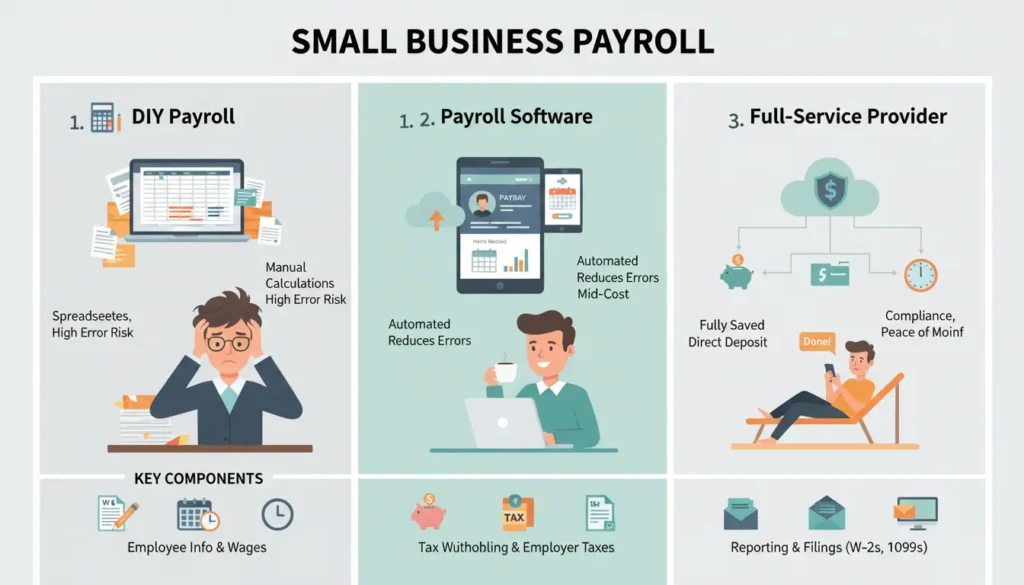
Preparation means checking your location’s official rate, updating payroll systems, and communicating with staff. Start these steps early to avoid payroll errors on the first payday after January 1.
Step-by-step checklist
- Confirm the exact new rate with your state labor department or city website.
- Update payroll software and timekeeping rules with the effective date.
- Run payroll simulations to calculate total labor cost changes.
- Communicate changes to employees and adjust budgets if needed.
Payroll calculation example
To calculate the change, multiply the rate increase by the employee’s hours. Then add employer payroll taxes and benefits to find the full cost impact.
Example formula: (New Rate − Old Rate) × Hours Worked = Weekly Wage Increase.
Small real-world case study
Case: A small cafe employs three full-time servers at 40 hours and two part-time cooks at 20 hours. The local minimum wage rises from $12.00 to $14.00 on January 1, 2026.
Calculations:
- Servers: 3 employees × 40 hours × $2.00 increase = $240 per week.
- Cooks: 2 employees × 20 hours × $2.00 increase = $80 per week.
- Total weekly wage increase = $320.
- Estimate employer payroll taxes (approx. 7.65%): $320 × 0.0765 ≈ $24.48 per week.
- Total weekly employer cost ≈ $344.48. Monthly (×4.33) ≈ $1,491.
This small cafe would need to plan for roughly $1,500 more in labor-related costs each month or find operating efficiencies to offset the increase.
Practical tips for employers handling the USA minimum wage increase 2026
Use clear communication, adjust scheduling, and consider menu or service pricing for businesses that depend heavily on hourly labor. Track overtime impacts — rate increases can push some hours into overtime thresholds.
Practical adjustments
- Review schedules to avoid unnecessary overtime.
- Cross-train staff so fewer workers can cover peak shifts.
- Audit job classifications to make sure exempt status is still valid.
- Negotiate supplier contracts or adjust pricing where appropriate.
Compliance checklist for January 1
Follow this checklist to stay compliant when new rates start:
- Confirm the effective date and exact hourly rate for each work location.
- Update payroll and HR systems with the new rate before the first payroll run in January.
- Recalculate salaried-to-hourly equivalencies if applicable.
- Post any required wage notices in the workplace or electronically as required by law.
- Retain documentation of rate changes and how you informed employees.
Where to find official new hourly pay rates
Always verify rates on official sources: your state labor department, city or county wage ordinances, and the U.S. Department of Labor. These sites post final rates, effective dates, and guidance for employers.
If you operate in multiple jurisdictions, track each location separately because city rules can differ from state rules.
Staying prepared for the USA minimum wage increase 2026 reduces legal risk and helps manage payroll cost changes. Review rates now, update systems, and communicate with staff to ensure a smooth transition on January 1.